
The interchain liquidity shift
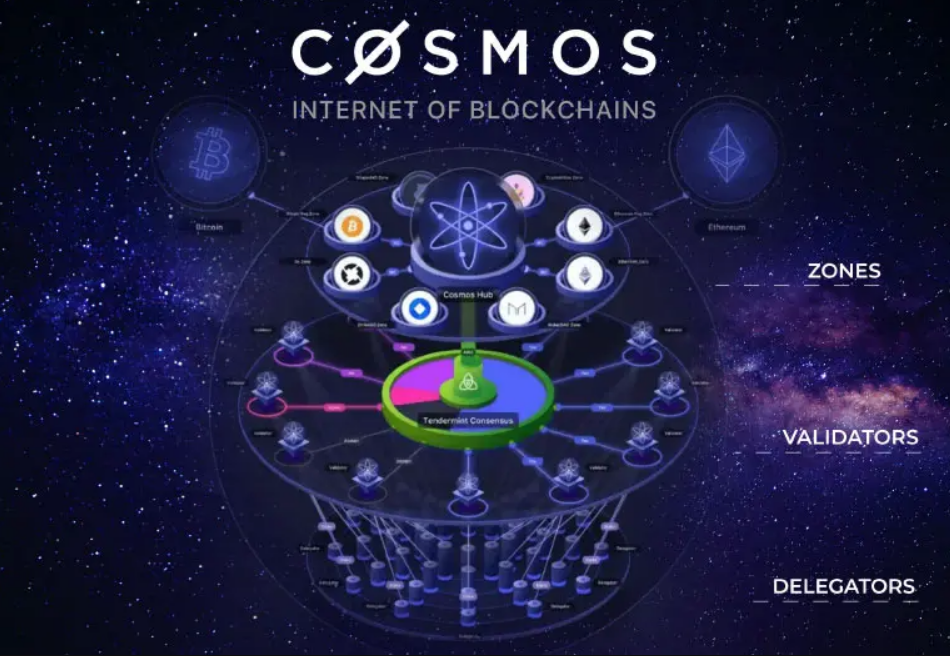
Cosmos has quietly become the backbone for institutional DeFi, moving far beyond simple token speculation. The network provides the interoperable infrastructure that allows institutions to enter new markets and build capabilities on their own terms, rather than relying on a single, congested chain. This shift marks a transition from abstract crypto assets to functional, utility-driven liquidity.
At the core of this utility is the Inter-Blockchain Communication (IBC) protocol. Think of IBC as a standardized shipping container for digital assets. Just as physical containers allow goods to move seamlessly between ships, trains, and trucks without repacking, IBC allows tokens and data to move between independent blockchains without the friction of centralized exchanges or complex bridge mechanisms. This enables "app-chains"—specialized blockchains designed for specific tasks—that can still interact with the broader ecosystem securely.
The result is a fragmented but highly efficient liquidity landscape. Instead of all capital getting stuck in one network, liquidity flows freely across specialized chains. This structure supports complex financial instruments and cross-chain applications that were previously impossible to build at scale. The network’s design prioritizes sovereignty and security, making it the preferred choice for organizations that cannot afford downtime or interoperability failures.
The Tools Behind Interchain Liquidity
Cosmos doesn’t rely on a single monolithic chain to move value. Instead, it uses a modular stack designed for institutions that need reliable, secure connectivity between distinct blockchains. These tools form the backbone of interchain liquidity, allowing assets to flow where they are needed most without getting stuck in isolated ecosystems.
Inter-Blockchain Communication (IBC)
IBC is the protocol that makes cross-chain communication possible. Think of it as the TCP/IP of blockchains: it ensures that data and tokens arrive intact and in order between two independent networks. Without IBC, a token on Osmosis could never reach a wallet on Cosmos Hub, and liquidity would remain trapped in silos. It provides cryptographic proof of transfer, meaning the receiving chain can trust the message from the sending chain without needing a centralized intermediary.
TokenFactory
TokenFactory simplifies the creation of custom assets. Before this tool, launching a new token required deploying complex smart contracts and managing significant infrastructure. TokenFactory allows any Cosmos SDK chain to issue tokens that are natively compatible with IBC. This means you can create a stablecoin or a governance token on a smaller app-chain, and it will automatically be ready for cross-chain transfer. It removes the technical friction that previously slowed down the adoption of specialized assets.
Relayers
Relayers are the software agents that carry IBC messages between chains. They read data from one chain and submit it to another, acting as the physical bridges for information. Relayers are incentivized through small fees, ensuring they remain active and responsive. For developers, choosing a reliable relayer network is as important as choosing the right blockchain, because the speed and cost of cross-chain transactions depend entirely on their efficiency.
Deploying on Osmosis and app-chains
Building on the Cosmos Network gives developers a choice between leveraging an existing liquidity hub or spinning up a dedicated chain. Osmosis acts as the primary decentralized exchange for the ecosystem, handling a significant portion of the network's trading volume. For many new projects, deploying on Osmosis is a strategic move to immediately access deep liquidity pools without the friction of bootstrapping a new market from zero.
| Feature | Osmosis | App-Chain |
|---|---|---|
| Liquidity Access | Instant access to deep pools across IBC | Must bootstrap or bridge assets |
| Customization | Standard DEX functionality | Full control over consensus and fees |
| Complexity | Lower barrier to entry | Requires node infrastructure management |
| Token Demand | Driven by trading volume | Driven by network utility and staking |
App-chains offer a different value proposition. By running a dedicated chain, projects can customize consensus mechanisms, gas fees, and security models to fit their specific needs. This approach is often preferred for complex DeFi protocols or gaming applications that require high throughput and predictable transaction costs. However, it comes with the responsibility of managing validator sets and maintaining the chain's infrastructure.
The decision often comes down to the project's maturity and goals. Early-stage projects may find Osmosis's ready-made liquidity attractive, while established protocols might prioritize the sovereignty of an app-chain. Both paths rely on the Inter-Blockchain Communication (IBC) protocol to ensure assets and data can move freely between chains, creating a unified, interchain liquidity landscape.
Common pitfalls in interchain design
Building interchain liquidity requires more than just wiring chains together; it demands rigorous infrastructure design. The most frequent failure point is relayer redundancy. If your relayers are single points of failure, a network outage or a simple configuration error can halt cross-chain messaging, leaving user assets stranded or transaction states inconsistent.
Another critical error is misaligned token incentives. Designing an app-chain without a clear value capture mechanism for the network’s security providers often leads to a liquidity vacuum. As noted in Cosmos governance discussions, the ATOM token needs to capture more ecosystem value to sustain the infrastructure, ensuring that validators and stakers are compensated for the security they provide across the interchain.
Galaxy Research highlights that projects like Osmosis succeed because they anchor their liquidity in a robust, secure infrastructure rather than chasing speculative trends. Ensure your design prioritizes this stability. When you build for interchain liquidity, you are building a financial highway; the roadbed must be solid before you invite traffic.
Community Sentiment and Ecosystem Growth
The conversation around Cosmos has shifted from experimental app-chains to institutional infrastructure. Forum discussions and social sentiment now focus heavily on ATOM’s value capture, with many arguing that the token needs to better reflect the utility of the Inter-Blockchain Communication (IBC) protocol it powers.
"Cosmos is becoming the institutional DeFi stack and nobody noticed." — Reddit Community
While the technical architecture is widely respected, the economic model remains under scrutiny. A recent thread on the official Cosmos Forum highlights the debate: ATOM must capture more ecosystem value to sustain long-term growth, rather than just serving as a generic security layer.
Key questions on Cosmos value and future
Investors often ask whether Cosmos is a good investment or if it has a viable long-term future. The answer depends on viewing ATOM not just as a speculative token, but as a gateway to the Interchain. As Kraken notes, the ecosystem supports diverse applications, including price-stable cryptocurrencies and decentralized finance (DeFi) projects that allow traders to leverage assets. This utility drives demand beyond simple speculation.
Future value projections, such as those for 2030, vary widely among analysts. Instead of relying on distant forecasts, monitor the growth of the Interchain Security model and the number of chains securing their own security through Cosmos. The network\u0027s ability to attract institutional partners, as highlighted in their official announcements, is a stronger indicator of sustained relevance than short-term price movements.
Helpful gear
Use these product recommendations as a starting point, then choose the size, material, and price point that fit how you actually use the gear.


As an Amazon Associate, we may earn from qualifying purchases.
No comments yet. Be the first to share your thoughts!