Cosmos infrastructure matters now
The narrative around Cosmos has shifted. What was once dismissed as a speculative playground for experimental tokens is maturing into institutional-grade infrastructure. This isn't just about the ATOM token; it's about the Inter-Blockchain Communication (IBC) protocol, which has become the standard for secure, sovereign interoperability in crypto.
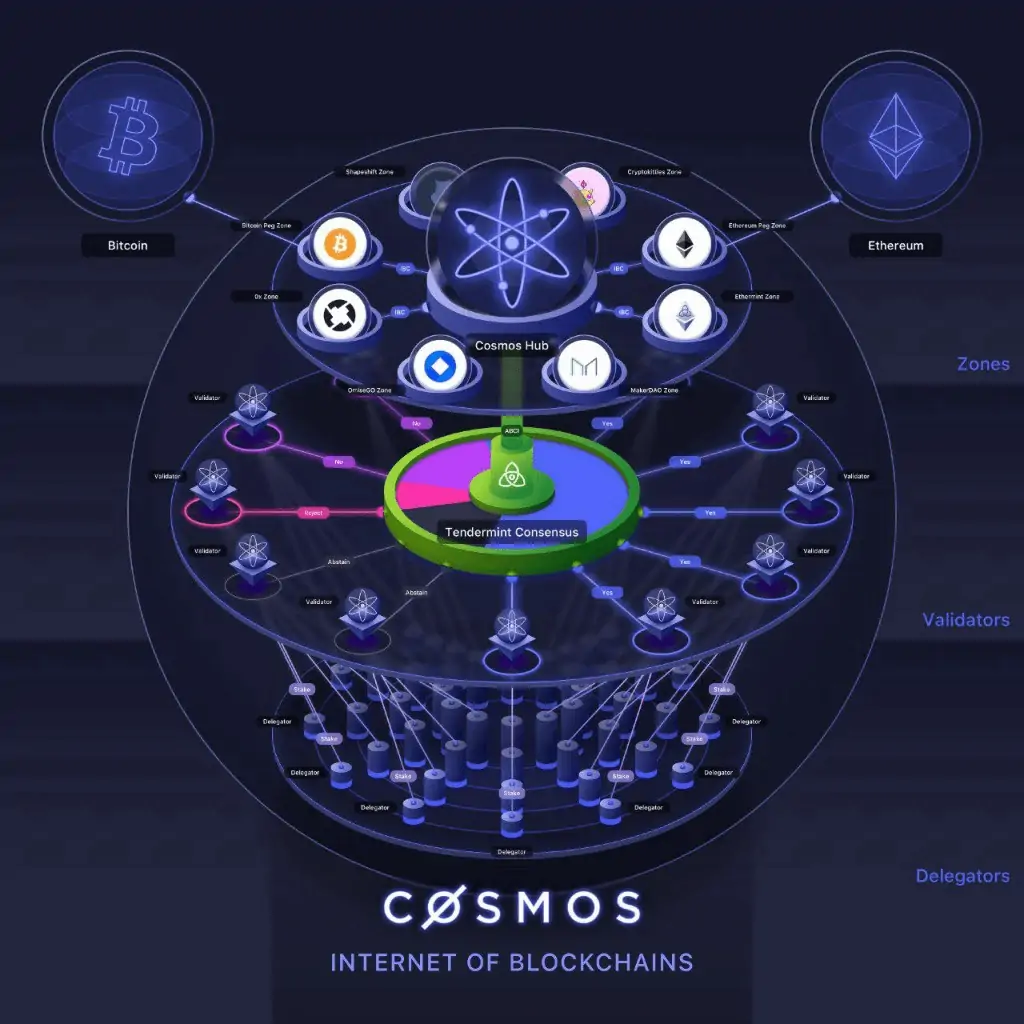
Cosmos is no longer just an ecosystem of siloed chains. It is an ever-expanding network of interoperable and sovereign blockchain apps, providing the rails for scaling, staking, and integrating assets like Bitcoin into DeFi workflows. For high-yield portfolios, this structural shift reduces the friction of moving capital across chains, turning what used to be a risky bridge-hop into a standardized protocol interaction. This transition from niche experiment to core infrastructure justifies the high-stakes nature of the strategy. Institutional capital is beginning to recognize that the value isn't just in holding a token, but in leveraging the connectivity that Cosmos provides. The market is moving toward a model where liquidity is fluid across sovereign zones, and Cosmos is the glue holding it together.

High-yield interchain strategies
The Cosmos network offers distinct yield avenues that leverage its interoperability. Instead of chasing volatile meme coins, these strategies focus on the core mechanics of the ecosystem: staking, lending, and liquidity provision. Each approach carries different risk profiles, but all capitalize on the growing capital flowing through the Inter-Blockchain Communication (IBC) protocol.

Native and Liquid Staking
Native staking remains the foundational yield source for ATOM holders. By delegating tokens to a validator, you earn annual percentage yields (APY) that fluctuate based on network inflation and validator performance. While native staking offers the highest security, it locks up your capital, reducing flexibility.
Liquid staking protocols solve this by issuing a derivative token that represents your staked ATOM. This allows you to earn staking rewards while simultaneously using the derivative in other DeFi protocols for additional yield. However, this introduces smart contract risk and potential depegging events.
Lending and Borrowing
Lending platforms within the Cosmos ecosystem allow users to supply assets like USDC or ATOM to earn interest from borrowers. This model is particularly attractive for stablecoin holders seeking yields higher than traditional savings accounts. The yield comes from the interest paid by borrowers who use the supplied collateral to take out loans.
The risk here is primarily counterparty and liquidation risk. If the value of the collateral drops significantly, the protocol may liquidate the position, potentially resulting in losses for the supplier. Always monitor the health factor of your positions and choose platforms with strong audit histories.
Liquidity Provision
Providing liquidity to decentralized exchanges (DEXs) like Osmosis or Kujira involves depositing pairs of tokens into automated market maker (AMM) pools. In return, you earn a share of the trading fees generated by the pool. This strategy can offer substantial yields, especially for volatile or less common token pairs.
However, liquidity provision carries impermanent loss. If the price ratio of the two tokens in the pool changes significantly, you may end up with less value than if you had simply held the tokens individually. This strategy is best suited for traders who understand the price dynamics of the specific pool and are willing to manage active rebalancing.
Institutional adoption signals
The narrative around Cosmos is shifting from speculative experimentation to institutional infrastructure. This transition is driven by the growing demand for sovereign, interoperable blockchains that can handle high-throughput DeFi without compromising on security. For a high-yield portfolio, this means the underlying rails are becoming more robust, reducing the counterparty risks often associated with centralized exchanges.
The real validation comes from enterprise-grade integrations. For instance, reports indicate that major financial institutions like Wells Fargo are exploring Cosmos-based solutions for tokenized deposits. This isn't just theoretical; it's a direct signal that traditional finance sees value in the Cosmos SDK's ability to build custom, compliant app chains. When legacy banking giants start building on your stack, the perceived risk drops significantly.
"Cosmos is becoming the institutional DeFi stack and nobody noticed." — r/cosmosnetwork
This sentiment is echoed across developer communities, where the focus has moved beyond simple tokenomics to practical utility. The ability to scale horizontally through the Inter-Blockchain Communication (IBC) protocol allows institutions to deploy specialized chains for specific assets, ensuring that regulatory requirements are met without clogging the main network.
The visual landscape of the ecosystem reflects this maturity. We are seeing a move away from generic DeFi aggregators toward specialized, purpose-built applications that leverage Cosmos' interoperability.

As these institutional signals solidify, the Cosmos ecosystem is positioning itself as a critical layer for the next generation of financial services. This isn't about replacing existing systems but providing the modular infrastructure they need to scale securely.
The High Stakes of Cosmos Yield
Building a high-yield Cosmos strategy requires more than just chasing the highest APY; it demands an understanding of the community's shifting sentiment and the technical realities of the Inter-Blockchain Communication (IBC) protocol. While the ecosystem offers robust tools for capital efficiency, the risks are inherent to the architecture and the market.
Institutional Interest vs. Retail Reality
A growing narrative in the Cosmos community is the pivot toward institutional adoption. Discussions on Reddit highlight a perception that Cosmos is quietly becoming the foundational stack for institutional DeFi, suggesting a maturation of the ecosystem beyond speculative retail trading. However, this institutional narrative often clashes with the on-chain reality where retail traders dominate volume, creating volatility that can disrupt high-yield strategies.
"Cosmos is becoming the institutional DeFi stack and nobody noticed." — r/cosmosnetwork
Technical Risks and Market Volatility
The primary technical risk lies in the complexity of IBC. While interoperability is Cosmos' greatest strength, it introduces cross-chain attack surfaces. A vulnerability in a connected chain can theoretically impact the security of the entire hub-and-spoke model. Also, the yield generated by these protocols is often inflationary or tied to volatile governance tokens. When market sentiment turns, these yields can evaporate rapidly, leaving holders with depreciating assets.
Community Sentiment on Risk Management
Community discussions frequently emphasize the need for diversification across different Cosmos SDK chains rather than concentrating all capital in a single protocol. Users often debate the "best strategy" for generating returns, with a strong consensus leaning toward long-term staking over short-term liquidity mining, which is prone to impermanent loss and high gas fees during network congestion.
Checklist for deploying your strategy
Building a Cosmos Crypto DeFi Strategy for High-Yield Portfolios works best as a clear sequence: define the constraint, compare the realistic options, test the tradeoff, and choose the path with the fewest hidden costs. That order keeps the advice usable instead of decorative. After each step, pause long enough to check whether the recommendation still fits the reader's actual situation. If it depends on perfect timing, unusual access, or a best-case budget, include a simpler fallback.

Common questions about Cosmos DeFi
Investors often search for clarity on Cosmos (ATOM) before committing capital to high-yield strategies. Below, we address the most frequent questions regarding investment viability, price potential, and income generation methods.
No comments yet. Be the first to share your thoughts!