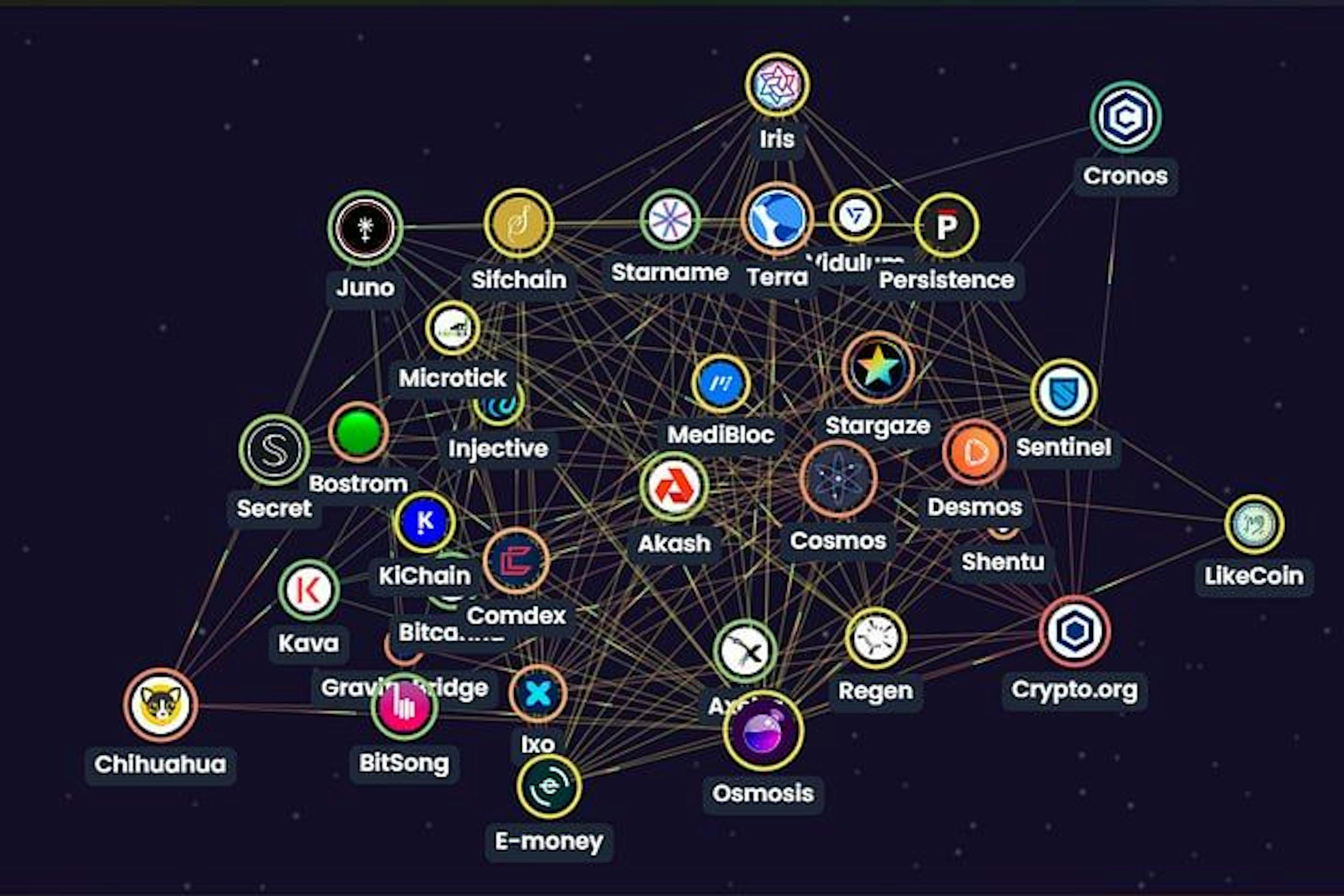
Cosmos DeFi infrastructure and interchain scaling
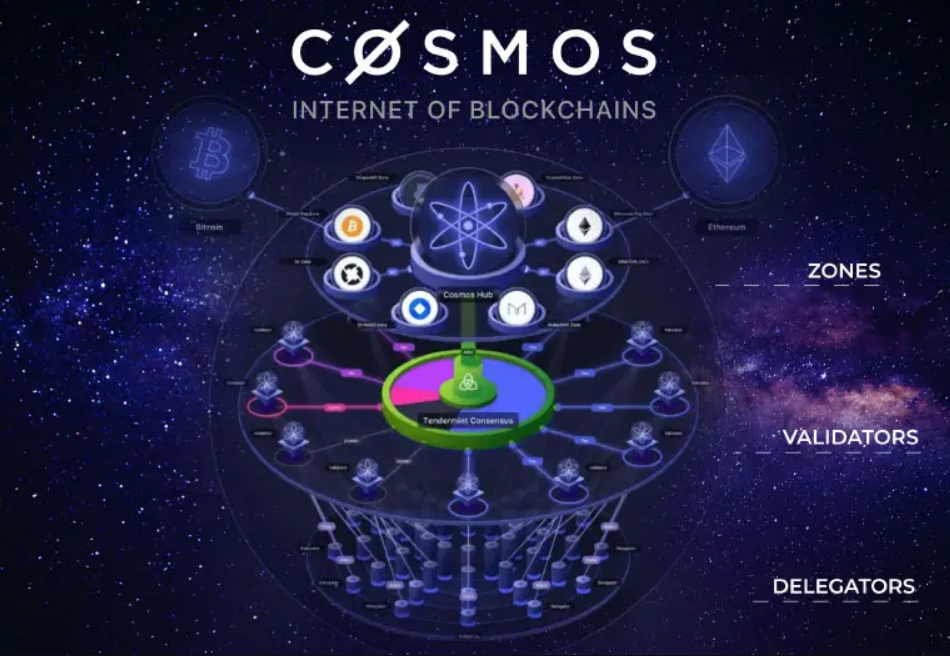
Cosmos provides the sovereign, interoperable infrastructure that institutional players need to enter new markets without sacrificing control. The network’s core thesis is simple: solve fragmentation in DeFi through the Inter-Blockchain Communication (IBC) protocol and a robust liquidity layer. Instead of forcing every application onto a single congested chain, Cosmos allows developers to build specialized, sovereign blockchains that can still talk to each other.
This architecture addresses a critical bottleneck in decentralized finance. By enabling seamless asset and data transfer between independent chains, Cosmos reduces the friction that typically kills liquidity. Projects like Osmosis have emerged as key reasons for deploying on the Cosmos Network, offering automated market-making that bridges these isolated ecosystems [2]. The result is a DeFi landscape where capital can flow freely, rather than being trapped in silos.
For high-stakes financial analysis, this interoperability is not just a technical feature; it is a liquidity multiplier. Institutions can maintain sovereign security while accessing deep pools of capital across the entire Cosmos ecosystem. This balance of independence and connectivity defines the modern Cosmos crypto defi infrastructure, offering a scalable alternative to monolithic blockchain designs.
Cosmos Hub vs. AppChains: Sovereignty and Liquidity Trade-offs
Building on the Cosmos DeFi infrastructure involves choosing between a centralized security model and decentralized application-specific chains. The Cosmos Hub serves as the primary security anchor and liquidity hub for the interchain ecosystem. It provides a shared set of validators and a standardized communication protocol, ensuring that assets moving across the network remain secure. However, this shared model means individual projects must compete for block space and adhere to governance decisions made by the broader community.
In contrast, application-specific chains (AppChains) allow developers to launch independent blockchains optimized for their specific use cases. This approach offers greater sovereignty, enabling teams to customize transaction fees, upgrade schedules, and consensus parameters without waiting for network-wide consensus. While this flexibility accelerates development and reduces congestion, it introduces a security trade-off: the chain must either bootstrap its own validator set or rely on the Hub’s security via IBC, which can be more expensive for smaller projects.
Osmosis represents a distinct third category: a decentralized exchange (DEX) and liquidity hub built on Cosmos. Rather than focusing on general-purpose smart contracts, Osmosis specializes in atomic swaps and liquidity provision across the interchain. It acts as a critical liquidity engine, allowing other Cosmos chains to access deep pools of assets without needing to build their own market-making infrastructure. This specialization makes Osmosis a foundational piece of the Cosmos DeFi infrastructure, bridging the gap between isolated AppChains and the Hub.
To understand how these components compare in practice, we can look at their core operational differences.
| Feature | Cosmos Hub | AppChains | Osmosis |
|---|---|---|---|
| Security Model | Shared (IBC) – high cost, high security | Independent or Hub-secured – variable cost/security | Hub-secured – relies on Cosmos Hub validators |
| Liquidity Depth | Deep – primary hub for IBC assets | Variable – often requires bridging to Hub | Deep – specialized for cross-chain swaps |
| Governance | On-chain – slow, broad consensus | Flexible – project-specific decisions | On-chain – focused on pool parameters |
| Primary Use Case | Security anchor and interchain settlement | Scalable dApp deployment | Decentralized exchange and liquidity provision |
When evaluating these options, the choice often comes down to whether you prioritize security or speed. The Cosmos Hub offers the strongest security guarantees but at the cost of flexibility. AppChains provide speed and customization but require careful consideration of security models. Osmosis fills the liquidity gap, ensuring that assets can move efficiently between these diverse environments.
For developers and investors navigating this landscape, understanding these trade-offs is essential. The Cosmos DeFi infrastructure is not a monolith but a collection of specialized components working together. By leveraging the Hub’s security, AppChains’ flexibility, and Osmosis’ liquidity, the ecosystem creates a robust environment for decentralized finance.
Technical chart and market trends
Use this section to make the Cosmos DeFi Infrastructure decision easier to compare in real life, not just on paper. Start with the reader's actual constraint, then separate must-have requirements from details that are merely nice to have. A practical choice should survive normal use, maintenance, timing, and budget. If a recommendation only works in an ideal situation, call that out plainly and give the reader a fallback path.
The simplest way to use this section is to write down the must-have criteria first, then compare each option against those criteria before weighing nice-to-have features.
Choosing Cosmos crypto defi infrastructure for institutional use
Building on Cosmos requires more than just technical compatibility; it demands a rigorous assessment of regulatory alignment and cross-chain reliability. For institutions entering the space, the choice of infrastructure is a strategic decision that balances permissionless innovation with compliance mandates.
Compliance and Institutional Readiness
Cosmos offers a modular framework that allows developers to build application-specific blockchains (AppChains) with built-in governance and security. This modularity is critical for institutions that need to implement specific compliance layers, such as identity verification or transaction monitoring, without compromising the network’s performance. The Cosmos Hub serves as the central security provider for many of these chains through Inter-Blockchain Communication (IBC), reducing the operational burden on individual projects. However, builders must ensure their chain’s governance models align with internal risk management policies, as decentralized control can introduce unpredictable regulatory risks.
Interoperability and Liquidity Fragmentation
While IBC enables seamless asset transfers between chains, it also fragments liquidity. A robust Cosmos crypto defi infrastructure strategy must account for this fragmentation by integrating liquidity aggregators or leveraging centralized exchange bridges where appropriate. The complexity of managing cross-chain assets increases operational overhead, making it essential to choose networks with established liquidity pools. Developers should prioritize chains that have adopted standardized asset representations, such as IBC-locked tokens, to minimize slippage and counterparty risk.
Strategic Decision Framework
When evaluating Cosmos-based solutions, institutions should prioritize networks with transparent governance records and strong validator sets. The Cosmos Hub’s roadmap, as outlined in public forum discussions, emphasizes stability and growth, which provides a clearer long-term outlook for builders. By focusing on compliance-ready architectures and robust interoperability standards, developers can build sustainable DeFi applications that meet institutional standards.
Common questions about Cosmos DeFi infrastructure
Investors often look to Cosmos as a critical piece of crypto DeFi infrastructure, particularly when evaluating the ATOM token's role in an interchain ecosystem. The network’s ability to connect distinct blockchains via the Inter-Blockchain Communication (IBC) protocol creates a unique value proposition compared to isolated Layer 1s. However, understanding the tokenomics and market dynamics is essential for high-stakes financial analysis.
Is Cosmos a good crypto to invest in?
Whether Cosmos is a sound investment depends on your conviction in multi-chain interoperability. The ATOM token serves as the security backbone for the Cosmos Hub and participates in IBC ecosystem growth. Unlike tokens that only secure a single chain, ATOM benefits from the expansion of the entire interchain. However, investors must weigh this potential against inflationary pressures and the competitive landscape of other interoperability solutions. It is a high-risk, high-reward play on blockchain connectivity rather than a stable store of value.
Does Cosmos have a future?
The future of Cosmos is tied to the success of its interchain strategy. With IBC already connecting dozens of independent blockchains, the infrastructure is proving its utility in real-world DeFi scenarios. The development of the Cosmos SDK allows other chains to launch with minimal friction, fostering a diverse ecosystem. While competition from Ethereum Layer 2s and other cross-chain bridges exists, Cosmos’s focus on sovereign, application-specific blockchains offers a distinct architectural advantage that many developers prefer for scalability and customization.
Can Cosmos reach $500?
A $500 price target for ATOM is widely considered unrealistic by most market analysts given current market capitalization constraints. For ATOM to reach that price, its market cap would need to exceed the total market cap of Bitcoin and Ethereum combined, which defies current financial logic. While bullish long-term scenarios exist, such valuations ignore the significant dilution from staking rewards and the competitive pressure from newer, faster blockchains. Investors should focus on adoption metrics and network utility rather than speculative price ceilings.
How much will Cosmos be worth in 2030?
Predicting the exact price of Cosmos in 2030 is speculative, but long-term value will likely correlate with the adoption of IBC and the health of the DeFi ecosystem built on Cosmos chains. If the interchain becomes the standard for cross-chain communication, ATOM could see sustained demand for security and governance. However, prices are influenced by broader macroeconomic trends, regulatory changes, and technological shifts. It is more prudent to analyze the fundamental growth of the Cosmos ecosystem rather than relying on fixed price predictions for a specific year.
Helpful gear
Use these product recommendations as a starting point, then choose the size, material, and price point that fit how you actually use the gear.


As an Amazon Associate, we may earn from qualifying purchases.
No comments yet. Be the first to share your thoughts!