
Why Cosmos defines interchain DeFi
The current state of decentralized finance is defined by fragmentation. Liquidity is trapped in isolated silos, and users face high friction when moving assets between different blockchain environments. Cosmos addresses this structural inefficiency by providing a dedicated cosmos crypto defi infrastructure built for interoperability. Rather than competing to become a single global settlement layer, Cosmos enables a network of independent, sovereign chains that communicate through the Inter-Blockchain Communication (IBC) protocol.
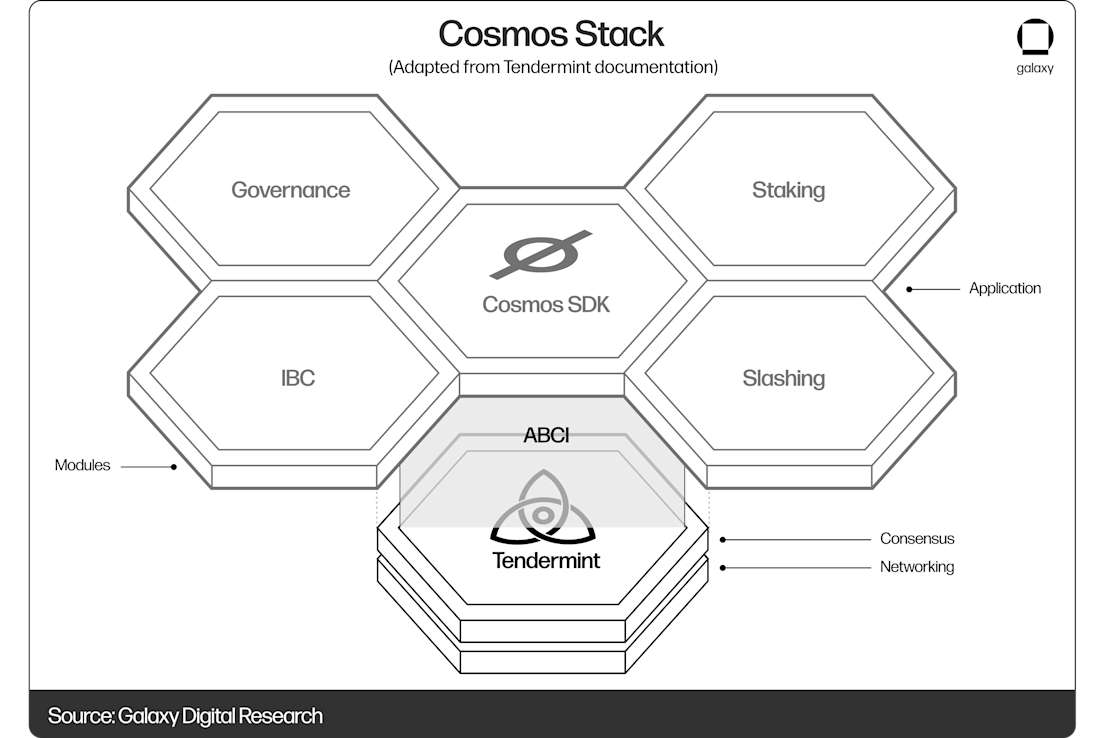
At the core of this architecture is the Cosmos SDK, which allows developers to build application-specific blockchains. These chains retain their own governance, tokenomics, and consensus mechanisms—powered by Tendermint Byzantine Fault Tolerance (BFT)—while remaining seamlessly connected to the broader ecosystem. This modular approach contrasts sharply with monolithic Layer 1s, where every application must compete for the same block space and security resources. By decoupling execution from consensus, Cosmos chains can scale horizontally without sacrificing sovereignty.
This infrastructure is particularly attractive for DeFi applications that require high throughput and customizable economic models. Projects like Osmosis have leveraged this flexibility to create specialized decentralized exchanges that operate independently of Ethereum’s gas constraints. As noted in research by Galaxy, the robust DeFi infrastructure of Cosmos is a primary driver for new projects choosing to deploy on the network. The result is an ecosystem where innovation is not bottlenecked by the limitations of a single chain, but amplified by the ability to interconnect specialized tools.
For institutional and high-stakes financial analysis, this distinction matters. Cosmos does not attempt to replace Ethereum; it provides the plumbing for a multi-chain future. By enabling sovereign chains to interoperate, it creates a scalable, efficient environment for DeFi that can adapt to specific use cases without compromising on security or connectivity.
ATOM price and market context
Cosmos (ATOM) operates as the foundational networking layer for a decentralized internet, yet its tokenomics and market dynamics often diverge from the infrastructure it supports. Understanding the current ATOM price is essential for evaluating the economic health of the Cosmos ecosystem, which underpins thousands of sovereign chains connected via the Inter-Blockchain Communication (IBC) protocol.
The ATOM token serves a dual purpose: it secures the Cosmos Hub through staking and acts as the liquidity glue for cross-chain transfers. However, the market has historically struggled to price this utility adequately, leading to periods of stagnation despite significant technical advancements in Tendermint consensus and modular blockchain architecture. Investors must look beyond simple price action to understand the underlying demand drivers for IBC-enabled assets.
To provide a clear view of ATOM's current market position, we utilize provider-backed data that reflects real-time trading activity. This approach avoids the pitfalls of stale static prices, ensuring that the analysis remains grounded in live market conditions. The following widgets display the current ATOM/USD price and a technical chart highlighting key support and resistance levels, which are critical for assessing short-term momentum and long-term trend viability.
For those interested in the physical infrastructure that powers these nodes, such as hardware wallets for secure ATOM storage or dedicated VPS providers for running validators, relevant tools can be found below. These products support the broader ecosystem by enabling secure participation and robust node operation.


As an Amazon Associate, we may earn from qualifying purchases.
Cosmos SDK vs. Ethereum L2s and Solana
Choosing digital ledger infrastructure requires satisfying engineering, compliance, and operational requirements simultaneously. For projects building cosmos crypto defi infrastructure, the decision often comes down to three distinct architectural philosophies: the sovereign modularity of Cosmos, the security inheritance of Ethereum L2s, and the raw throughput of Solana. Each stack offers a different trade-off between developer speed, regulatory flexibility, and chain sovereignty.
The Cosmos SDK is a scalable, open-source framework designed to build multi-asset public Proof-of-Stake blockchain platforms. Its defining feature is the Inter-Blockchain Communication (IBC) protocol, which allows independent chains to communicate securely without a central coordinator. This modularity enables developers to launch sovereign chains with custom governance and tokenomics, a stark contrast to the shared security model of Ethereum Layer 2s or the monolithic design of Solana.
| Feature | Cosmos SDK | Ethereum L2s (e.g., Arbitrum) | Solana |
|---|---|---|---|
| Architecture | Modular (AppChains) | Shared Security (Rollups) | Monolithic |
| Consensus | Tendermint BFT | Optimistic / ZK Proofs | Proof of History (PoH) + Tower BFT |
| Sovereignty | High (Custom state) | Medium (Dependent on L1) | Low (Shared network state) |
| Compliance | Flexible (On-chain governance) | Complex (Multi-layer) | Limited (Network-level) |
| Dev Speed | High (Go/Rust) | Medium (Solidity/EVM) | High (Rust/C) |
Ethereum Layer 2s prioritize security by inheriting it from the Ethereum mainnet, but this comes at the cost of sovereignty. Developers are bound by the EVM standard and the security assumptions of the base layer. Solana offers high throughput and low latency out of the box, making it ideal for high-frequency trading applications, but its monolithic nature means all applications compete for the same block space, and upgrades require network-wide coordination.
For financial institutions and regulated entities, the Cosmos SDK provides a unique advantage: compliance-friendly sovereignty. Because each app chain is independent, projects can implement specific governance rules, upgrade paths, and access controls without affecting the broader network. This isolation is critical for high-stakes financial analysis where operational risk must be contained. While Ethereum L2s offer familiarity for Solidity developers, and Solana offers raw speed, Cosmos provides the structural flexibility needed for complex, multi-asset DeFi ecosystems that require both interoperability and regulatory clarity.
Key tools for interchain development
Building the Cosmos crypto DeFi infrastructure requires a specific set of open-source components that prioritize modularity over monolithic design. Developers don't just write smart contracts; they assemble sovereign blockchains using a toolkit designed for interoperability from the ground up. The ecosystem relies on three core pillars: the Cosmos SDK, Tendermint consensus, and the Inter-Blockchain Communication (IBC) protocol.
The Cosmos SDK: The Building Block
The Cosmos Software Development Kit (SDK) is the primary framework for creating sovereign chains. It provides a modular set of Go modules that handle everything from token economics to governance, allowing teams to customize their chain's functionality without rewriting core logic. This modularity means developers can build specialized blockchains for specific DeFi use cases—such as high-throughput trading or private data storage—while maintaining compatibility with the broader network.
Tendermint: The Consensus Engine
At the heart of every Cosmos SDK chain lies Tendermint Core, a Byzantine Fault Tolerant (BFT) consensus engine. Tendermint separates the consensus mechanism from the application state, ensuring that the network agrees on the order of transactions before the application processes them. This architecture delivers finality in seconds, a critical feature for financial applications where settlement speed and security are paramount. It provides the underlying security layer that allows independent chains to trust each other's outputs.
IBC: The Interchain Protocol
The Inter-Blockchain Communication (IBC) protocol is the technical standard that enables these independent chains to talk to each other. IBC allows for the trustless transfer of tokens and arbitrary data between any two chains that have IBC enabled. For the Cosmos crypto DeFi infrastructure, this means liquidity isn't trapped in silos; it can flow freely between different ecosystems, creating a unified market for assets and services.
Institutional adoption and tokenization
The conversation around Cosmos crypto defi infrastructure is shifting from retail speculation to institutional utility. Traditional finance players are increasingly looking for blockchain architectures that can handle high-stakes transactions without sacrificing compliance or sovereignty. This transition marks a pivotal moment for the ecosystem, moving beyond experimental use cases to real-world financial infrastructure.
Wells Fargo’s interest in building on Cosmos highlights this trend. The bank is exploring how sovereign, compliance-ready infrastructure can support institutional-grade applications. By leveraging the Inter-Blockchain Communication (IBC) protocol, institutions can deploy chains that are both secure and interoperable with other networks. This approach allows banks to maintain control over their regulatory environment while still participating in a broader decentralized economy.
Similarly, Figure Technologies has integrated Cosmos-based solutions to streamline asset tokenization. Their work demonstrates how the Tendermint consensus mechanism provides the finality and speed required for financial markets. These examples illustrate that the value of Cosmos crypto defi infrastructure lies in its ability to offer a modular framework for regulated entities.
The adoption by major financial institutions validates the technical decisions made by the Cosmos ecosystem. Rather than forcing a one-size-fits-all blockchain, the network provides the tools for institutions to build custom chains that meet specific regulatory needs. This flexibility is crucial for widespread institutional adoption, as it allows for tailored solutions that integrate seamlessly with existing financial systems.
As more entities recognize the benefits of this infrastructure, the focus remains on practical utility. The goal is not just to create new tokens, but to build a robust backbone for the future of finance. The ongoing development of tools and standards within the Cosmos ecosystem continues to support this vision, ensuring that the network remains relevant and competitive in the evolving digital asset landscape.
Strategic checklist for infrastructure choice
Deciding whether to build on cosmos crypto defi infrastructure requires weighing sovereignty against interoperability. Unlike monolithic chains, Cosmos allows you to maintain control over your consensus and security while still connecting to a broader network via the Inter-Blockchain Communication (IBC) protocol.
Use this framework to evaluate if the Cosmos SDK and Tendermint consensus engine align with your specific DeFi or institutional needs.
Determine if your project requires a sovereign chain. Cosmos enables independent validators and governance, which is critical for institutional compliance and regulatory clarity that shared security models often struggle to provide.
If your DeFi protocol relies on cross-chain liquidity, IBC is the standard. It offers a trust-minimized way to move assets between chains without wrapping tokens, reducing smart contract risk compared to bridge-based solutions.
Check if your team is comfortable with the Cosmos SDK and Tendermint. The ecosystem offers robust tooling for building application-specific blockchains, but the learning curve can be steeper than deploying on a single-layer EVM chain.
Galaxy Research highlights that for new projects, Osmosis and the overall DeFi infrastructure of Cosmos are key reasons to deploy on the network. This suggests that if you need immediate liquidity and a mature DeFi ecosystem, Cosmos offers a compelling advantage over isolated chains.
No comments yet. Be the first to share your thoughts!