Set up your Cosmos wallet
To access the Cosmos ecosystem, you need a non-custodial wallet that supports the Inter-Blockchain Communication (IBC) protocol. This setup gives you direct control over your ATOM and other IBC assets, which is essential for participating in DeFi applications across the network.
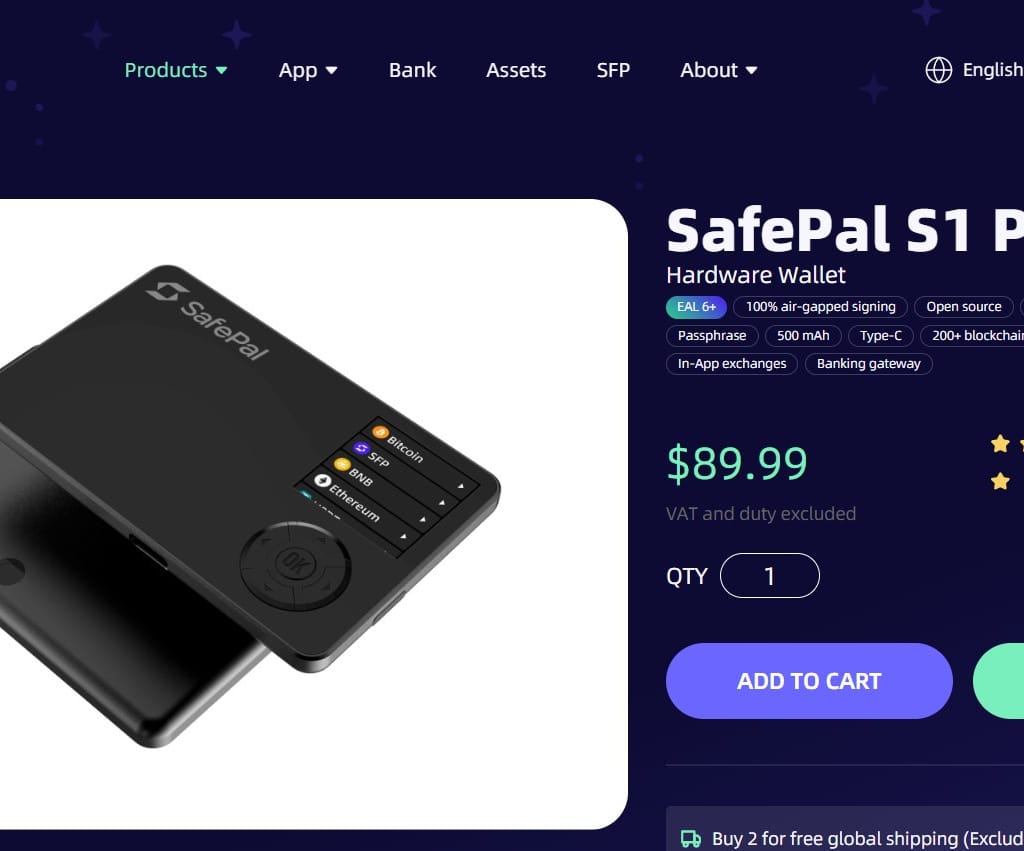
Select a wallet that explicitly supports Cosmos (ATOM) and IBC transfers. Hardware wallets like Ledger or software options like Keplr are standard choices. Ensure the wallet allows you to export your private keys or seed phrase, as this is your only recovery method if you lose access to your device.
Download the wallet app from the official source or hardware manufacturer’s website. Avoid third-party links. During installation, the app will generate a 12 or 24-word seed phrase. Write this down on paper and store it in a secure, offline location. Never digitize this phrase or store it in cloud notes.
Most reputable wallets will ask you to confirm your seed phrase by selecting words in the correct order. This step ensures you have recorded the phrase accurately. If you make a mistake here, you could lose all funds permanently. Take your time and double-check each word.
Once set up, select the Cosmos Hub network within your wallet interface. This connects you to the primary blockchain of the ecosystem. You can now view your ATOM balance and prepare to receive assets from other chains via IBC.
For official documentation on supported networks and security best practices, refer to the Cosmos Network website. This ensures you are using the most current and secure methods for interacting with the ecosystem.
Stake ATOM for network rewards
Staking ATOM on the Cosmos Hub is the most direct way to earn yield on your holdings. By locking your tokens, you help secure the network and receive rewards in return. This process is straightforward, but it requires you to actively manage your keys and understand the risks of slashing.
The Cosmos Hub operates as the central blockchain of the Cosmos ecosystem, acting as the cornerstone for interchain security and governance. When you stake ATOM, you are essentially voting on the network's direction and validating transactions. In return, the network issues new ATOM tokens as inflation rewards, which are distributed to validators and delegators.
Step-by-step staking guide
Follow this sequence to stake your ATOM safely. Accuracy here prevents lost rewards or accidental exposure to slashing.
Not all validators are equal. Use the Cosmos Hub block explorer or a reputable dashboard to filter candidates. Look for validators with high uptime (99%+), reasonable commission rates, and sufficient self-bonding. Avoid validators with recent downtime, as this exposes you to slashing penalties.
Open your preferred Cosmos-compatible wallet, such as Keplr or Leap. Navigate to the staking section and ensure your network is set to the Cosmos Hub mainnet. Verify the contract address if you are interacting directly via a dApp, though most wallets handle this automatically.
Select your chosen validator and enter the amount of ATOM you wish to delegate. Review the transaction details carefully, including the gas fee. Confirm the transaction in your wallet. Once confirmed, your tokens are locked and begin earning rewards immediately, though they may take a few hours to appear in your dashboard.
Rewards are not automatically compounded; you must claim them. Check your rewards balance periodically and submit a "withdraw rewards" transaction. You can also choose to redelegate or un-stake your ATOM, but remember that unbonding takes 21 days on the Cosmos Hub.
Risks to watch
Staking is not risk-free. If a validator you delegate to misbehaves or goes offline, you face slashing, where a portion of your staked ATOM is destroyed. Always diversify your stakes across multiple validators to mitigate this risk. Additionally, be aware of the 21-day unbonding period; you cannot access your funds immediately if you decide to exit.
Quick checklist
-
Verify validator uptime and commission rate
-
Confirm network is Cosmos Hub mainnet
-
Review gas fees before confirming
-
Set up reward withdrawal reminders
-
Diversify stakes to avoid single-point failure


As an Amazon Associate, we may earn from qualifying purchases.
Bridge assets to Osmosis
The Cosmos Crypto DeFi for works best as a clear sequence: define the constraint, compare the realistic options, test the tradeoff, and choose the path with the fewest hidden costs. That order keeps the advice usable instead of decorative. After each step, pause long enough to check whether the recommendation still fits the reader's actual situation. If it depends on perfect timing, unusual access, or a best-case budget, include a simpler fallback.
The simplest way to use this section is to write down the real constraint first, compare each option against it, and choose the path that still works outside ideal conditions.
Provide liquidity on Osmosis
The Cosmos Crypto DeFi for works best as a clear sequence: define the constraint, compare the realistic options, test the tradeoff, and choose the path with the fewest hidden costs. That order keeps the advice usable instead of decorative. After each step, pause long enough to check whether the recommendation still fits the reader's actual situation. If it depends on perfect timing, unusual access, or a best-case budget, include a simpler fallback.
The simplest way to use this section is to write down the real constraint first, compare each option against it, and choose the path that still works outside ideal conditions.
Avoid common bridge mistakes
Bridging assets between Cosmos zones feels like sending a package through a global logistics network, but unlike a standard parcel, crypto transactions are irreversible and often permissionless. A single misstep—selecting the wrong destination chain or ignoring slippage settings—can result in permanent loss. Because the Inter-Blockchain Communication (IBC) protocol relies on precise packet validation, the burden of accuracy rests entirely on you.
Verify the destination zone
Before initiating any transfer, confirm that the receiving chain is an active member of the Cosmos ecosystem. IBC bridges do not work like centralized exchange deposits; they require specific channel identifiers. If you are moving assets from Osmosis to Cosmos Hub, for example, you must ensure you are using the correct IBC channel rather than a generic deposit address.
Consult the official Cosmos documentation to verify active channels and port configurations. This step is non-negotiable. Sending IBC tokens to a smart contract address that does not support IBC packet parsing will cause the transaction to fail or the assets to vanish into a black hole. Always cross-reference the target zone’s official website for the latest bridge instructions.
Manage slippage and timeouts
Slippage tolerance is your primary defense against price volatility during the bridging process. If the market moves significantly while your packet is in transit, a low slippage setting may cause the transaction to revert. However, setting it too high exposes you to front-running or unfavorable execution prices. A 1-2% tolerance is often a safe baseline for stablecoin transfers, while more volatile assets may require slightly wider buffers.
Timeouts are equally critical. IBC packets have a specified timeout height or timestamp. If the network is congested and the packet does not reach its destination before the timeout, the assets are automatically returned to the sender. However, this process can take hours or days. If you are moving assets urgently, monitor the network status via the Cosmos Explorer to avoid unnecessary delays.
Confirm transaction details
Once you have verified the chain and set your slippage, perform a final review of the transaction details. Check the sender address, the receiver address, and the amount being transferred. Mistyping a single character in the destination address can lead to irreversible loss. This is the moment to pause and breathe. Rushing through this step is the most common cause of user error in DeFi.
After confirmation, monitor the transaction status using a block explorer like Mintscan. IBC transfers are not instantaneous; they involve multiple hops and validation steps. If the status remains "pending" for an extended period, check for network congestion or failed packets. Patience and verification are your best tools for maintaining security in the Cosmos ecosystem.
Frequently asked: what to check next
Cosmos is a network of independent blockchains that can talk to each other. It solves the problem of isolated chains by using the Inter-Blockchain Communication (IBC) protocol. This allows assets and data to move between different blockchains without a central intermediary. The ecosystem includes the Cosmos Hub, which issues the ATOM token, and many independent zones like Osmosis and Celestia.
Does Cosmos coin have a future?
Cosmos has a clear future as long as it maintains its focus on interoperability. The network’s "Internet of Blockchains" vision is gaining traction as more projects choose to build independent zones rather than monolithic chains. However, competition from Ethereum Layer 2s and other interoperability solutions like Polkadot and Chainlink CCIP is intense. ATOM’s value depends on whether developers continue to choose the Cosmos SDK for new projects. If adoption slows, the network’s relevance could diminish.
Is Cosmos a good crypto coin?
ATOM is a strong utility token for governance and security, but it carries significant risk. Staking ATOM secures the Cosmos Hub and rewards validators. However, the token faces inflationary pressure from staking rewards and token unlocks. High inflation can dilute value if demand doesn’t keep pace. Investors should view ATOM as a high-beta play on the broader Interchain ecosystem, not a stable store of value. Always assess your risk tolerance before allocating capital.
Can you make money on Cosmos?
You can earn yield by staking ATOM or providing liquidity on Cosmos-based DEXs like Osmosis. Staking on Kraken or other exchanges can offer yields around 20% annually, though this varies with network participation. Be aware of impermanent loss in liquidity pools and smart contract risks in DeFi protocols. Yield farming on Cosmos chains is not risk-free; a bug in a protocol can lead to total loss. Never stake more than you can afford to lose, and diversify across multiple chains.
Can Cosmos reach $500?
Reaching $500 per ATOM is highly unlikely in the near term. At that price, ATOM’s market cap would exceed $50 billion, surpassing Ethereum’s current valuation in many scenarios. While some analysts speculate on long-term growth, such targets ignore the massive supply and inflationary mechanics of the ATOM token. Price predictions are speculative and often disconnected from fundamentals. Focus on the network’s utility and adoption metrics rather than arbitrary price targets.
No comments yet. Be the first to share your thoughts!