Cosmos crypto defi infrastructure limits to account for
Cosmos addresses the interoperability bottleneck by allowing independent blockchains to connect through the Inter-Blockchain Communication (IBC) protocol. Instead of forcing all activity onto a single congested chain, this architecture lets developers launch specialized chains for specific use cases, from high-speed trading to institutional settlement. The result is a modular ecosystem where liquidity and data can move freely between networks without relying on centralized bridges or risky wrapping mechanisms.
For DeFi builders, this modularity reduces the risk of single points of failure. If one application chain experiences a bug or congestion, it does not necessarily bring down the entire network. Projects like Osmosis leverage this structure to offer deep liquidity pools that are isolated from the volatility of the base layer. This separation allows DeFi protocols to focus on their core functionality rather than spending resources on basic consensus and security layers.
However, this decentralized approach introduces complexity. Managing cross-chain security and ensuring that assets are properly verified across different consensus layers requires careful design. IBC v2 aims to streamline this by improving the efficiency of light clients and reducing the overhead for relayers. As the network matures, the primary constraint shifts from technical connectivity to economic incentives that keep these interconnected chains aligned and secure.
Cosmos crypto defi infrastructure choices that change the plan
Building on Cosmos requires choosing between independent sovereignty and ecosystem liquidity. The network’s modular design allows chains to operate their own consensus and governance, but this fragmentation creates distinct tradeoffs for developers and users. Understanding these structural differences is essential for evaluating long-term viability.
| Factor | Cosmos Hub | Independent Zone | IBC v2 |
|---|---|---|---|
| Liquidity Depth | Highest; central liquidity hub for ATOM and stablecoins | Fragmented; relies on IBC swaps or external bridges | Improved routing; reduces slippage for cross-zone trades |
| Consensus Speed | Moderate; secured by high stake weight and validator set | Variable; depends on individual chain’s Tendermint config | No change; focuses on messaging, not consensus |
| Security Model | Highest; largest market cap and validator set | Lower; smaller validator sets increase attack surface | Adds proof verification; reduces bridge risk |
| Governance Agility | Slow; large proposal queues and high quorum requirements | Fast; local communities can vote quickly | No change; governance remains chain-specific |
Liquidity and Fragmentation
Liquidity is the primary constraint in the Cosmos ecosystem. Unlike Ethereum, where most assets settle on a single layer, Cosmos chains are independent. This means trading pairs are split across multiple zones. IBC v2 addresses this by optimizing message passing, but it does not automatically merge liquidity pools. Users must still navigate cross-chain swaps, which can introduce latency and slippage. For DeFi protocols, this fragmentation limits depth and increases transaction costs for large trades.
Security and Sovereignty
The tradeoff between security and sovereignty is fundamental. The Cosmos Hub offers the strongest security due to its large validator set and stake weight. Independent zones, however, prioritize speed and customization, often running smaller validator sets. This makes them more agile but more vulnerable to targeted attacks. IBC v2 improves security by enhancing proof verification, reducing the risk of faulty cross-chain messages. However, it does not change the underlying security model of individual zones.
Governance and Upgrades
Governance on Cosmos is slow but deliberate. The Hub’s large stake weight and high quorum requirements make upgrades difficult but stable. Independent zones can change parameters quickly, allowing for rapid experimentation. IBC v2 does not alter governance structures; it focuses on interoperability. For developers, this means balancing the need for quick iteration with the stability required for institutional adoption.
How to evaluate Cosmos (ATOM) for your portfolio
Cosmos has shifted from a speculative experiment to a critical interoperability layer. The recent IBC v2 upgrades and the rise of modular chains have changed how institutions and developers interact with the network. Osmosis remains the primary liquidity hub, but the real value now lies in the infrastructure connecting independent blockchains. To decide if ATOM fits your strategy, apply this practical framework rather than relying on price speculation.
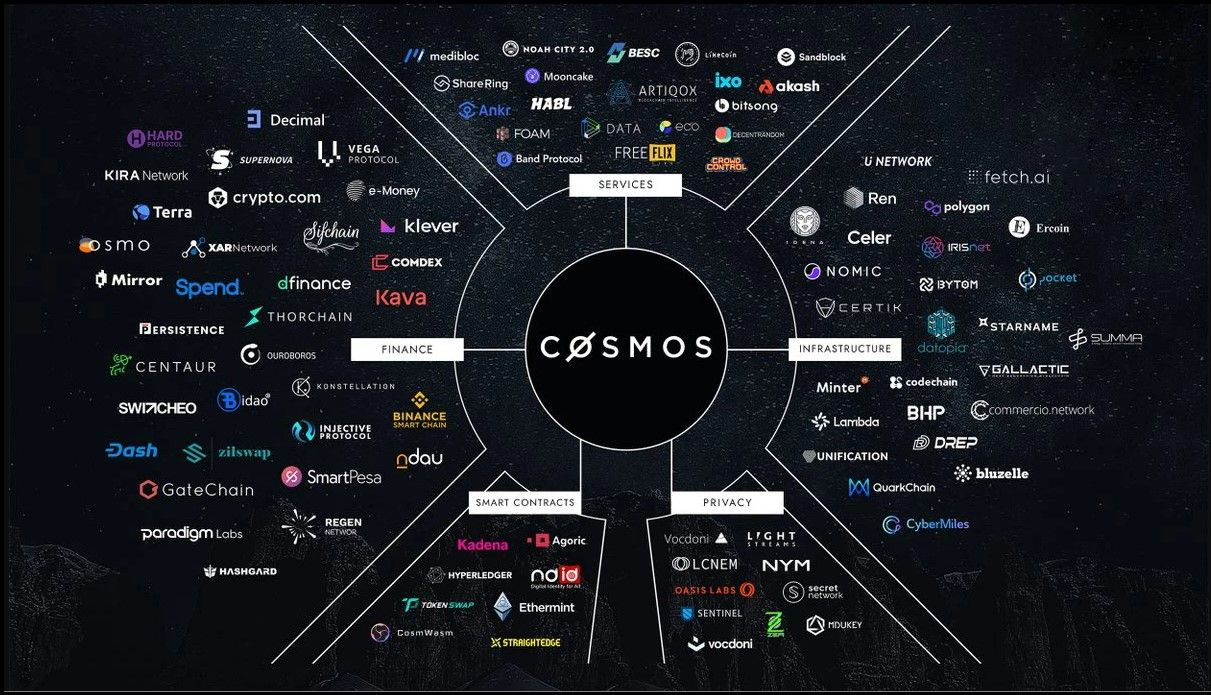
Look for government or enterprise deployments using Cosmos SDK. The official Cosmos network site highlights institutional-grade interoperability. Projects that build on Cosmos often prioritize security and regulatory compliance. If you see major entities launching chains on the Cosmos ecosystem, it signals long-term utility beyond retail trading.
Osmosis is the primary decentralized exchange on the network. Analyze its total value locked (TVL) and trading volume relative to competitors like Ethereum L2s. Deep liquidity reduces slippage and attracts more developers. A healthy DeFi ecosystem indicates that the network is being used for actual financial activity, not just token speculation.
Count the number of active zones connected via IBC. The "Cosmos ecosystem" is not a single chain but a network of sovereign blockchains. Growth in connected zones suggests the modular approach is gaining traction. More chains mean more cross-chain communication, which increases the network effect and utility of the ATOM token as a security provider.
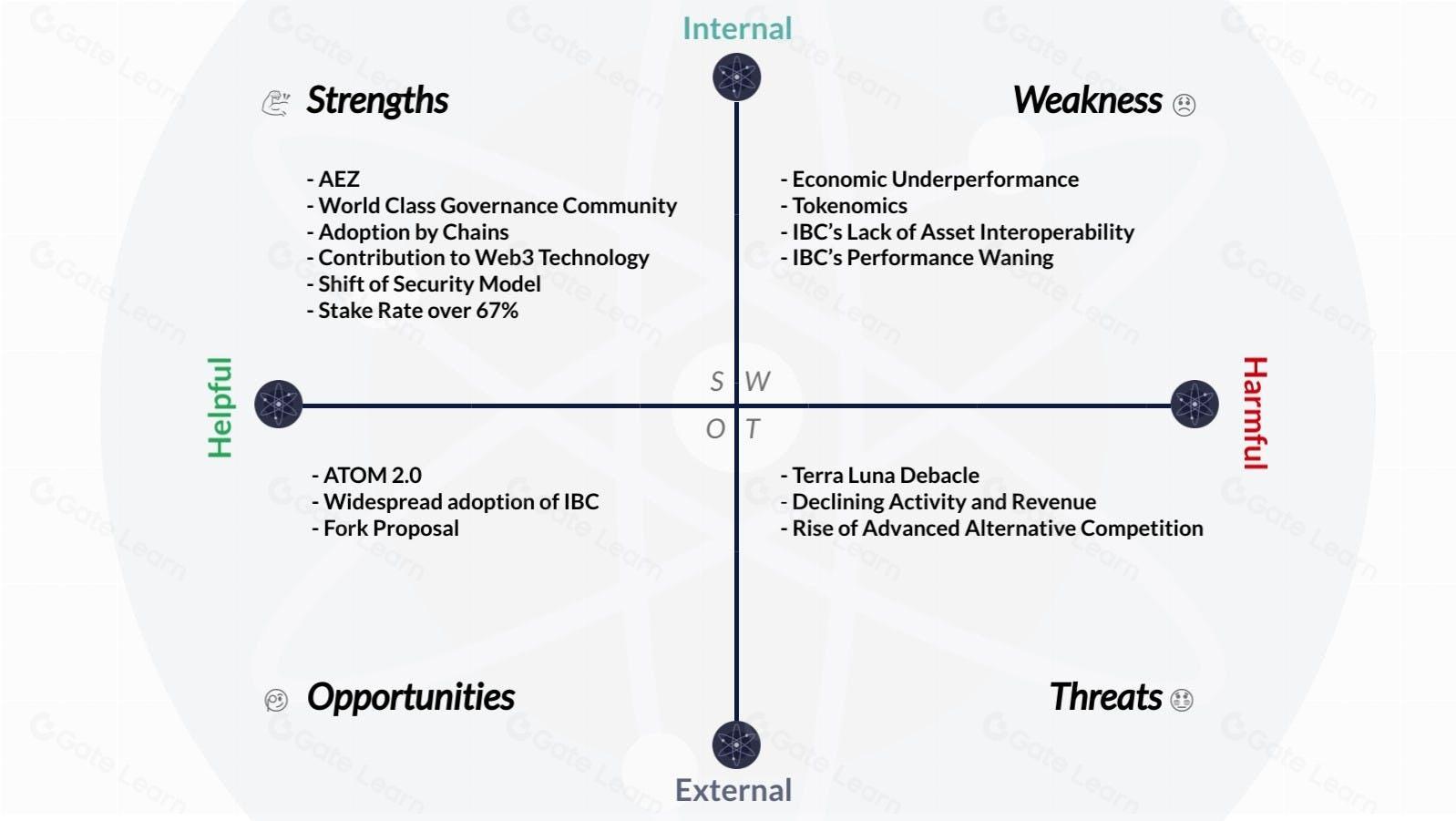
Check the current staking APY and inflation rate. ATOM holders earn rewards by securing the network. Compare these yields to other Proof-of-Stake networks. If inflation is too high, it dilutes value. If yields are too low, stakers may sell. Balanced tokenomics are essential for holding ATOM as a long-term investment.

As an Amazon Associate, we may earn from qualifying purchases.
| Metric | Cosmos (ATOM) | Ethereum |
|---|---|---|
| Interoperability | Native IBC | Bridges/L2s |
| Consensus | Tendermint BFT | Proof-of-Stake |
| Modularity | High (SDK) | Low (Monolithic) |
Watchouts for Cosmos Investors
The Cosmos ecosystem offers powerful tools like IBC v2 and modular chains, but the narrative around ATOM often obscures practical risks. Investors frequently mistake infrastructure utility for token value, leading to mispriced positions. Before committing capital, you need to separate the technical reality from the speculative hype.
The "Hub" Value Trap
Many assume ATOM captures value from every chain built on Cosmos. This is a common mistake. IBC facilitates transfer, but it doesn't automatically route fees or revenue back to the Hub. If a chain like Osmosis or Celestia generates significant activity, ATOM holders see no direct benefit unless governance explicitly changes the economic model. Treat ATOM as a governance token, not a yield-bearing asset.
Overestimating IBC Adoption
IBC is the strongest technical feature, but adoption is uneven. While major chains connect, many smaller zones remain isolated or use simplified bridges. Do not assume all "Cosmos-ecosystem" tokens are equally secure or liquid. IBC v2 improves this, but network effects take time. Verify which chains are actually using IBC for daily volume, not just testnet announcements.
Price Targets vs. Reality
Predictions of $100 require a market cap exceeding $100 billion, ignoring current supply dynamics and competition. Analysts suggest a more realistic ceiling near $67 by 2031, requiring massive sustained growth. This doesn't mean Cosmos has no future, but it does mean expecting exponential short-term gains is unrealistic. Focus on the ecosystem's utility rather than distant price targets.
Cosmos crypto infrastructure: what to check next
Investors evaluating Cosmos (ATOM) often face uncertainty regarding its long-term viability and price potential. The following answers address the most common practical objections before you consider a position.
Does Cosmos coin have a future?
Cosmos is positioning itself as the institutional DeFi stack, shifting from a speculative asset to critical interoperability infrastructure. With the upcoming IBC v2 upgrade and the rise of modular chains, the network is solving real fragmentation issues rather than just trading volume. This structural utility provides a stronger foundation than many Layer-1 competitors, though adoption depends on developer migration to these new modular standards.
Can Cosmos reach $100?
Reaching a $100 price point is highly unlikely in the near term. Current market capitalization implies that ATOM would need to increase by over 900% to hit that level, which exceeds most analyst forecasts. Conservative estimates place the maximum potential around $67.56 by 2031, suggesting that significant, sustained ecosystem growth is required to justify higher valuations.
Is Cosmos a good crypto to invest in?
Cosmos is suitable for investors seeking exposure to blockchain interoperability and institutional-grade infrastructure. Projects like Osmosis leverage the Cosmos SDK to build resilient DeFi applications, making ATOM a proxy for this sector’s growth. However, it carries higher risk than established Layer-1s due to its competitive landscape and the technical complexity of the IBC protocol.
How much will Cosmos be worth in 2030?
Forecasts for 2030 vary, but most data suggests modest growth rather than exponential spikes. Analysts generally project ATOM to trade between $15 and $25, depending on the success of IBC adoption and broader crypto market cycles. These estimates assume steady institutional interest rather than retail-driven speculation.
No comments yet. Be the first to share your thoughts!